


How to ensure the accurate transmission of flight instructions with the function and parameter settings of the data transmission system of the unmanned aerial vehicle?
The function and parameter settings of the data transmission system of the unmanned aerial vehicle are crucial for ensuring the accurate transmission of flight instructions. It not only concerns the flight safety of the unmanned aerial vehicle but also directly affects the efficiency and effectiveness of mission execution. The following will discuss aspects such as the function, parameter settings of the data transmission system, and strategies to ensure the accurate transmission of flight instructions.
Function overview of data transmission system
The data transmission system of the unmanned aerial vehicle is mainly responsible for transmitting instructions and data from the ground control station to the unmanned aerial vehicle, and feeding back the collected data and status information of the unmanned aerial vehicle to the ground control station. The data transmission system generally includes data transmission antennas, data transmission modules, data transmission protocols, etc.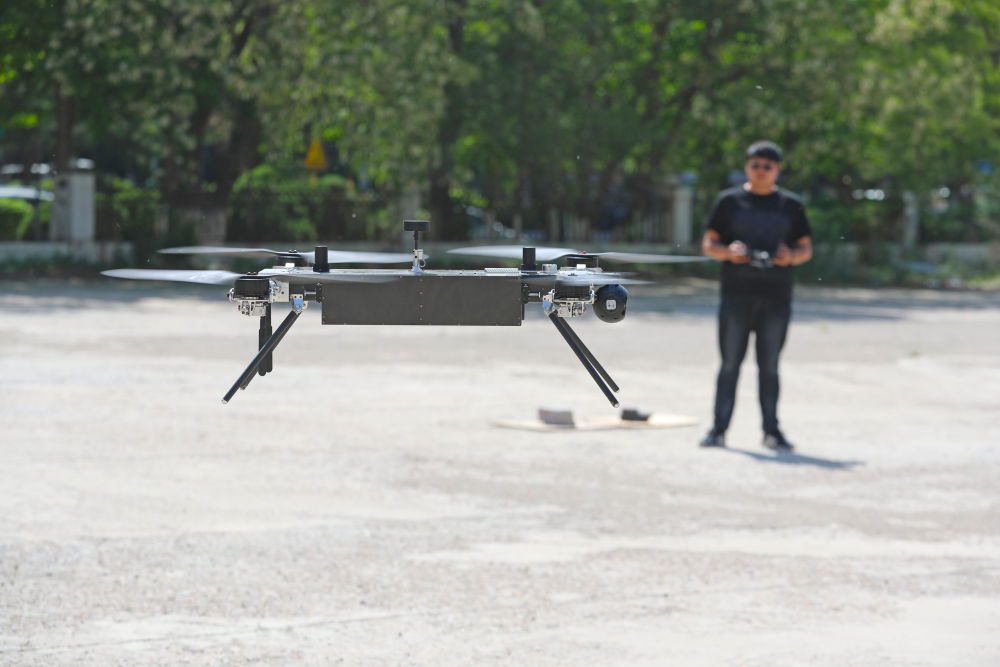
Data transmission antenna: Used for the transmission and reception of wireless signals, which is a key component of the data transmission system.
Data transmission module: Responsible for processing and managing data transmission signals, including signal decoding, encoding, and encryption operations.
Data transmission protocol: Defines the standard format and rules for data transmission in the data transmission system, common ones include UDP, TCP, etc.
Parameter settings of data transmission system
Parameter settings are the foundation for the efficient operation of the data transmission system. Reasonable parameter settings can not only improve the stability of data transmission but also optimize the efficiency of data transmission. The following are some key parameters and their setting suggestions:
Data transmission rate: According to the flight speed of the unmanned aerial vehicle and the mission requirements, reasonably set the data transmission rate to ensure the real-time performance of the data.
Data packet size: Adjust the size of data packets according to the network environment and the importance of data to balance the real-time performance and bandwidth utilization efficiency of data transmission.
Data transmission protocol: Choose a data transmission protocol suitable for the task requirements, such as UDP protocol is suitable for scenarios with high real-time requirements, while TCP protocol is more suitable for applications requiring high reliability.
Data transmission antenna settings: According to the flight altitude and mission requirements of the unmanned aerial vehicle, reasonably select and adjust the direction and angle of the data transmission antenna to optimize the signal coverage range and strength.
Strategies to ensure the accurate transmission of flight instructions
Data redundancy and error correction mechanism: Add data redundancy and error correction mechanisms to the data transmission system to improve the reliability of data transmission.
Link monitoring and fault detection: By real-time monitoring the status of the data transmission link, link faults can be discovered and handled in time to ensure the normal transmission of flight instructions.
Data encryption and security measures: Adopt data encryption technology to protect the security of data transmission during the process, prevent illegal data theft or tampering.
Consistency of communication protocols between ground control station and unmanned aerial vehicle: Ensure the consistency of communication protocols between the ground control station and the unmanned aerial vehicle to avoid data transmission errors caused by protocol mismatch.
In summary, by reasonably setting the parameters of the data transmission system, optimizing the functions of the data transmission system, and adopting effective strategies to ensure the accurate transmission of flight instructions, the efficiency and safety of unmanned aerial vehicle mission execution can be greatly improved. In practical applications, flexible adjustments according to specific task requirements and technical conditions are also necessary.
 What factors limit the communication distance of UAVs, and how can it be effectively extended?
 How to improve efficiency through innovative applications of drones in logistics and warehousing?
 What is the key role of the development of drone battery technology in enhancing endurance capability?
 The development of gesture control interaction functions for drones, the principle of recognizing gestures and executing them?